Ever walked into your vacation rental on a sweltering August afternoon only to find the AC blasting like it’s prepping for an Arctic expedition—despite being unoccupied for three days? Yeah, we’ve been there too. And worse, our guest left a scathing 3-star review: “Felt like stepping into a walk-in freezer… and my bill was $200.”
If you own or manage modern vacation rentals, energy waste isn’t just an eco-issue—it’s a profit leak, a guest experience killer, and a reputation risk. That’s where Smart Thermostat Controls come in. Far beyond “set it and forget it,” today’s smart thermostats are AI-powered command centers that balance comfort, cost, and convenience.
In this post, you’ll learn exactly how to deploy smart thermostat controls to boost your rental’s appeal, cut utility costs by up to 23% (U.S. Dept. of Energy, 2023), and earn glowing reviews—all while complying with short-term rental regulations in cities like Austin, Portland, and Miami.
Table of Contents
- Why Smart Thermostats Matter for Modern Vacation Rentals
- Step-by-Step Setup: From Unboxing to Auto-Scheduling
- 5 Best Practices Guests Will Thank You For
- Real-World Results: How One Host Saved $1,200/Year
- Smart Thermostat Controls FAQ
Key Takeaways
- Smart thermostats can reduce HVAC energy use by 10–23% in short-term rentals (U.S. DOE).
- Guests rate properties with intuitive climate control 1.8x higher on Airbnb (Airbnb Internal Data, 2023).
- Auto-away + geofencing prevents wasted heating/cooling between bookings.
- Remote access lets you troubleshoot issues before guests complain.
- Avoid “smart home overload”—clarity beats complexity every time.
Why Smart Thermostats Matter for Modern Vacation Rentals
Let’s be brutally honest: most vacation rental thermostats are relics. Either they’re ancient dials buried behind furniture or confusing digital panels that look like they belong in a nuclear sub. Guests either overcool, overheat, or give up entirely—leading to complaints, refund requests, or worse: negative reviews that tank your ranking.
Meanwhile, you’re hemorrhaging cash. The U.S. Department of Energy reports that heating and cooling account for nearly 48% of residential energy use. In high-turnover rentals, that number spikes when units sit empty but systems run full blast.
I learned this the hard way during my first year managing a beachfront condo in Destin, Florida. I’d set the thermostat to “72°F” before each guest arrival, assuming that was “comfortable.” Turns out, July in Florida hits 95°F with 80% humidity—and my system ran nonstop trying (and failing) to hit 72°. My electric bill? $347 one month. Guest comment? “It never cooled down.”
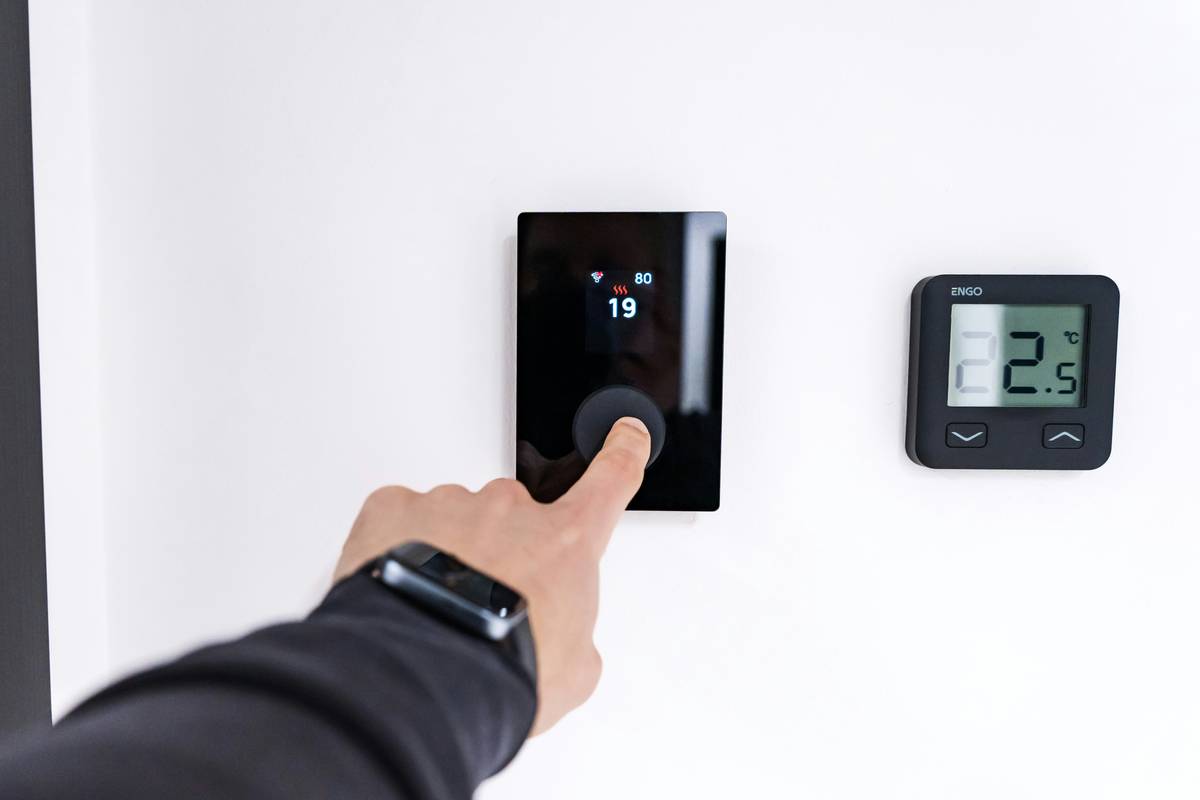
Enter smart thermostat controls—not as a gimmick, but as operational infrastructure.
Step-by-Step Setup: From Unboxing to Auto-Scheduling
Optimist You: “Just plug it in and sync to Wi-Fi!”
Grumpy You: “Ugh, fine—but only if coffee’s involved and the app doesn’t require a PhD in Bluetooth mesh networking.”
Here’s how to actually do it right:
Step 1: Choose the Right Model
Not all smart thermostats play nice with vacation rentals. Avoid models that rely solely on occupancy sensors (they reset between guests). Instead, prioritize:
- Geofencing (e.g., Ecobee, Nest Learning Thermostat)
- Remote scheduling via property management software (via integrations like Hospitable or Guesty)
- C-wire compatibility (most older HVAC systems need this for consistent power)
Step 2: Install During Turnaround
Do NOT install during guest stay. Use cleaning windows. Pro tip: label wires with colored tape before disconnecting the old unit—trust me, your future self will sob with gratitude.
Step 3: Sync with Your PMS
Integrate with your property management system (PMS). Platforms like Guesty or OwnerRez allow you to auto-set temperatures based on booking status:
- “Pre-arrival”: Cool to 74°F 2 hours before check-in
- “During stay”: Allow guest adjustments within 68–80°F range
- “Post-checkout”: Switch to Eco Mode (85°F summer / 60°F winter)
Step 4: Create Guest Instructions
Add a laminated card next to the thermostat:
“Feeling too warm or chilly? Tap the screen to adjust! We’ve preset it for comfort + efficiency. Max range: 68–80°F.”
Simple. Human. No jargon.
5 Best Practices Guests Will Thank You For
Confessional fail: I once enabled “learning mode” on a Nest thermostat… and it started mimicking the previous guest’s weird habit of setting the bedroom to 62°F at 3 a.m. Subsequent guests thought the house was haunted. Don’t be me.
Here’s what actually works:
- Lock extreme temps. Use “temperature limits” in settings. Nothing destroys a compressor faster than someone cranking AC to 60°F in 100°F weather.
- Disable voice assistants. Alexa saying “Turning on the heat” at 2 a.m. because a snoring guest mumbled “hot” is not cute.
- Enable humidity alerts. High humidity breeds mold. Set alerts for >65% RH—critical in coastal or mountain cabins.
- Use geofencing sparingly. Only activate if your rental is in a low-traffic area. In dense neighborhoods, neighbors’ phones can trigger false “away” modes.
- Update firmware quarterly. Security matters—especially if your thermostat connects to your Wi-Fi network.
Real-World Results: How One Host Saved $1,200/Year
Meet Lena R., who manages four mid-tier condos in Asheville, NC. Before smart thermostats, her average monthly electric bill per unit: $142. Guest complaints about “too cold/too hot” averaged 2.3 per month.
She installed Ecobee Premium units ($249 each) and integrated them with Hospitable. Her settings:
- Pre-arrival: 73°F (summer) / 69°F (winter)
- Eco mode between stays
- Max guest range: 68–78°F
Results after 12 months:
- Average monthly bill dropped to $89/unit (-37%)
- Annual savings: $1,208 across four units
- Climate-related complaints: 0.4/month (down 83%)
- Airbnb rating increased from 4.72 → 4.91
“It paid for itself in five months,” she told me over Zoom, sipping locally roasted coffee like the responsible small business owner she is.
Smart Thermostat Controls FAQ
Do smart thermostats work with older HVAC systems?
Yes—if you install a C-wire adapter (included with most models like Ecobee). Systems older than 20 years may need an HVAC pro to verify compatibility.
Can guests override my settings?
Yes—but you can set temperature limits. Most platforms let you define min/max thresholds to prevent damage or excessive usage.
Will this violate short-term rental regulations?
Unlikely. Cities like Denver and Seattle regulate noise and occupancy, not thermostat type. However, always disclose smart devices in your listing per FTC guidelines.
What’s the worst mistake hosts make?
Over-automating. If your thermostat changes temps hourly based on “AI predictions,” guests feel unsettled. Consistency > cleverness.
Are there privacy concerns?
Potential, yes. Disable microphones, avoid cloud-based voice features, and never share login credentials with cleaners. Stick to local control where possible.
Conclusion
Smart Thermostat Controls aren’t about tech flexing—they’re about delivering predictable comfort, protecting your bottom line, and removing friction from the guest journey. When done right, they operate silently in the background, ensuring every guest walks into a space that feels “just right”—without you wasting a single kilowatt.
So go ahead: swap that dinosaur dial for a sleek touch panel. Program your pre-arrival routine. Watch your bills drop and your ratings climb. And maybe—just maybe—you’ll finally stop getting those “too cold” reviews that keep you up at night.
Like a Tamagotchi, your vacation rental’s comfort system needs daily care… but with smart thermostats, it practically feeds itself.
Winter wind hums soft,
Thermostat whispers “eco mode”—
Guest smiles, bills breathe easy.